The US EB-5 investor visa remains a classic pathway to securing a Green Card through investment. However, its minimum capital threshold starting at $800,000 and bureaucratic processing times stretching from 3 to 5 years force investors to seek alternative routes. Amid high interest rates set by the US Federal Reserve and tightening compliance procedures, international capital is shifting toward more flexible and expeditious jurisdictions. Alternatives fall into three main categories: non-immigrant or secondary US investment visas, European residence-by-investment programs ("Golden Visas"), and tax-optimized programs across the Caribbean and Vanuatu.
The US tax system categorizes investors into two primary groups: tax residents (citizens, Green Card holders, and individuals passing the Substantial Presence Test) and non-residents (Non-Resident Aliens, NRA). Each group is governed by distinct sections of the Internal Revenue Code (IRC), featuring fundamental differences in taxation principles, baseline rates, and reporting procedures required by the Internal Revenue Service (IRS).
Investments under the U.S. EB-5 Immigrant Investor Program—at $800,000 in Targeted Employment Areas (TEAs) or $1,050,000 in non-TEAs—are legally required to remain "at risk." U.S. Citizenship and Immigration Services (USCIS) strictly prohibits regional centers and developers from offering guaranteed capital returns. While standard capital return timelines range from 5 to 7 years, developer loan defaults or payment delays extending 2 to 4 years require direct legal intervention by the investor.
Early capital recovery from U.S. commercial real estate investment projects is legally achievable, though it requires satisfying specific contractual conditions and executing complex legal procedures. In commercial development syndications and Private Equity Real Estate (PERE) funds, standard capital lock-up periods typically range from 3 to 7 years. Initiating an early investor exit invariably triggers financial discounts and additional transactional costs.
The process of obtaining immigrant status through the EB-5 program is regulated by United States Citizenship and Immigration Services (USCIS). Legislative updates under the 2022 Reform and Integrity Act (RIA) established differentiated processing timelines based on project categories and geographical locations.
Taxation of foreign investors in US real estate is governed by the Internal Revenue Service (IRS). An investor’s tax status as a Non-Resident Alien determines the calculation rules for the tax base, withholding procedures, and available financial structures. The absence of US tax residency requires the application of specific sections of the Internal Revenue Code (IRC), including FIRPTA mechanisms and elective income reporting regimes.
A Request for Evidence (RFE) from the U.S. Citizenship and Immigration Services (USCIS) is an official requirement to submit additional documentation regarding an EB-5 petition. The agency issues an RFE when the initial filing contains technical errors, logical discrepancies, or insufficient evidence regarding the lawful source of funds or job creation.
Institutional and private investors concentrate capital in two key segments of U.S. commercial real estate: industrial logistics and retail properties. According to Green Street and CBRE, the average capitalization rate (Cap Rate) for Class A logistics assets ranges from 5.2% to 5.8%, while strip malls and grocery-anchored centers range from 6.5% to 7.2%. Cash-on-Cash (CoC) yields range from 7% to 12% annually, depending on debt structure.
When allocating capital across international jurisdictions, most investors rely on standard macroeconomic metrics: GDP trajectory, central bank interest rates, inflation figures, and Foreign Direct Investment (FDI) inflows.
The EB-5 Reform and Integrity Act (RIA), enacted in March 2022, fundamentally altered the timeline for obtaining a US Green Card through investment. The law introduced a fast-track processing framework for projects located in Rural Targeted Employment Areas (Rural TEAs). While processing standard I-526E petitions for urban projects (Urban TEAs) takes 24 to 36 months, investors in rural projects receive approvals within 12 to 18 months, with some cases processed in under 10 months.
The statutory investment threshold for the EB-5 program in Targeted Employment Areas (TEAs) is $800,000. In practice, this $800,000 represents only the principal capital deployed into the new commercial enterprise. The true total deal budget ("All-in cost") includes Regional Center administrative fees, legal representation, USCIS filing fees, and transaction charges, bringing the total expenditure 12% to 15% above the nominal investment amount.
Acquiring US real estate as a foreign national requires a firm grasp of the domestic regulatory framework, tax obligations, and financing mechanisms. Deviating from established legal standards can result in losing up to 40% of invested capital to taxation and regulatory penalties.
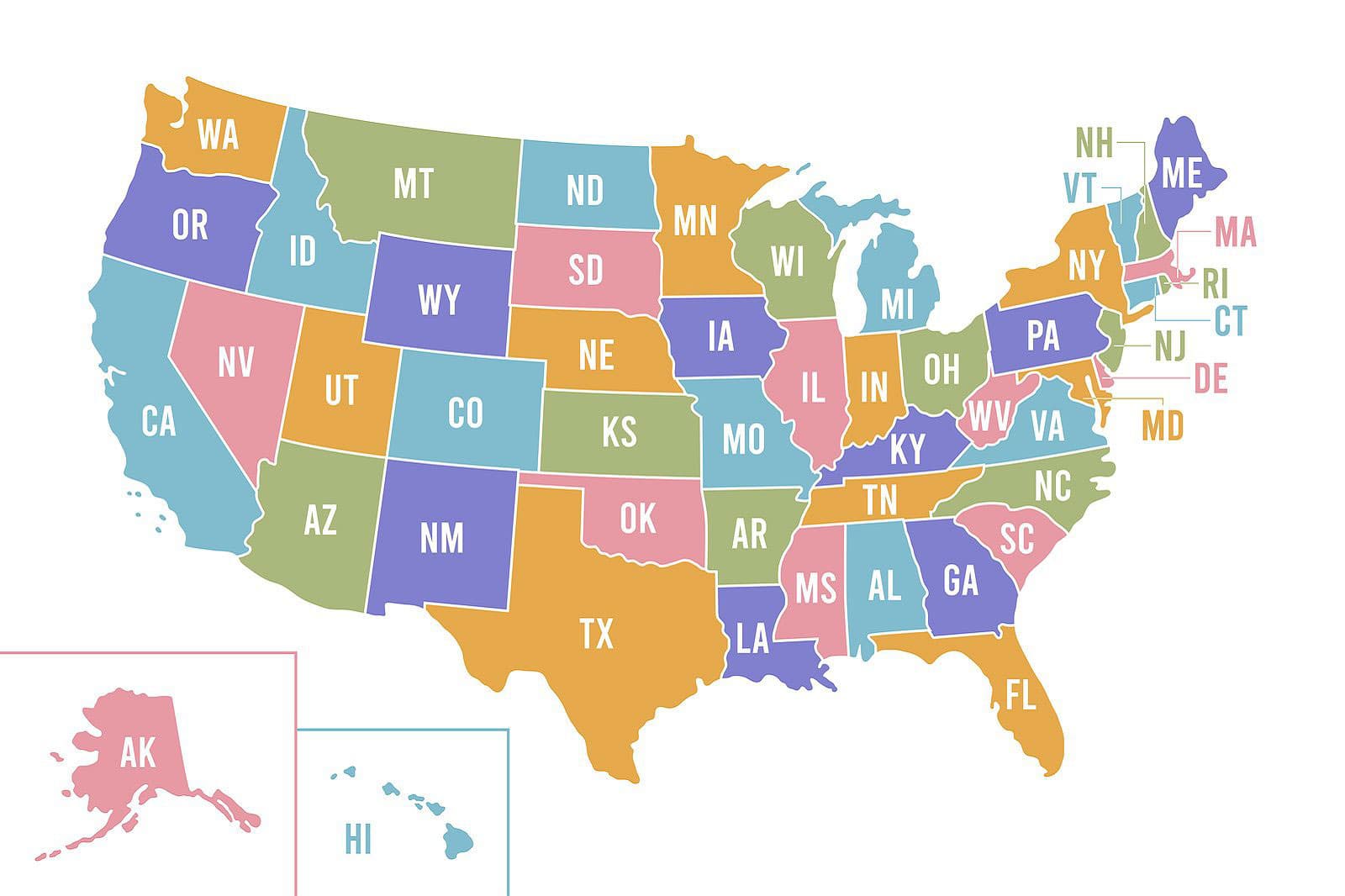
Selecting a region for US real estate investment requires analyzing migration trends, employment dynamics, the corporate climate, and local regulations. Sun Belt states and select logistics hubs in the Midwest exhibit above-average population growth and deliver high capital returns.
EB-5 investors frequently commit a systemic error by making investment decisions based on marketing collateral and architectural renderings. The true indicator of investment security lies within the project’s financial structure (Capital Stack) and the legal standing of the debt. Structuring EB-5 funds as Mezzanine Debt or Preferred Equity carries well-managed risks, provided that the Loan-to-Value (LTV) ratio and job creation buffer (Job Cushion) are accurately calculated.
A structural shift in the U.S. commercial real estate market has triggered steep vacancy rate spikes across Class B and C office assets in major metropolitan central business districts (CBDs). By 2026, vacancy rates in this segment have reached 22–25%. Lenders and development funds are actively unloading distressed assets at a 40–50% discount relative to 2019–2021 valuations. Concurrently, the market faces an acute shortage of locations equipped for artificial intelligence infrastructure and last-mile logistics. Adaptive reuse projects converting underperforming office buildings into flex-logistics hubs and edge data centers are delivering internal rates of return (IRR) of 18–24%.
The U.S. commercial real estate market has split into two distinct operational realities. Outdated legacy properties face severe liquidity constraints, constrained bank financing, and persistent tenant departures. Conversely, high-tech, ESG-compliant Class A+ multifamily communities and grocery-anchored retail centers are posting strong net operating income (NOI) growth. Institutional asset managers (including Blackstone, Starwood, and Brookfield) alongside family offices from the Middle East and Central Asia are systematically concentrating capital across the Sun Belt—primarily Texas, Florida, Arizona, North Carolina, and Georgia. This institutional "Flight to Quality" strategy safeguards capital against inflation risks and refinancing headwinds.
The EB-5 Reform and Integrity Act (RIA), passed by the U.S. Congress, fundamentally reshaped the distribution of investment flows. By 2026, a distinct trend has emerged: investors from the Middle East (MENA), India, and Pakistan are systematically redirecting capital from urban developments (Urban TEAs) into rural projects (Rural TEAs). Institutional investors and family offices are selecting this category due to specific statutory privileges and the absence of immigration backlogs.
The process of obtaining an EB-5 immigrant visa takes three to five years. Wealthy families invest $800,000 to secure their children’s access to educational and economic infrastructure in the United States. Due to bureaucratic delays at the U.S. Citizenship and Immigration Services (USCIS), many children turn 21 before their parents' petition is approved. They are automatically excluded from the immigration application and lose the right to receive a green card. In legal practice, this process is known as Aging-Out.
Securing a green card automatically classifies an investor as a U.S. tax resident. The Internal Revenue Service (IRS) enforces the Worldwide Income principle, requiring residents to report and pay taxes on global earnings regardless of where those assets or income streams are generated. U.S. tax residency triggers on the exact day an individual enters the country on an immigrant visa or on the date an Adjustment of Status application (Form I-485) is approved.
Purchasing an individual single-family rental (SFR) or condo in resort markets like South Florida is often marketed as a foolproof vehicle for private capital deployment. Retail buyers typically rely on gross yield metrics, which appear attractive on paper at 7–9% annually. However, a detailed audit of expense structures and operating overhead reduces actual net cap rates to a modest 2.5–3.5%.
The U.S. Census Bureau records a massive redistribution of population and private capital across the country. High-tax states burdened by rising regulatory costs are losing individuals and corporate taxpayers. Between 2020 and 2025, California, New York, and Illinois suffered a combined net loss of over 2.5 million residents. The primary net migration inflow is directed toward the Sunbelt macro-region—Texas, Florida, North and South Carolina, Tennessee, Georgia, and Arizona.
US tax law allows real estate investors to reduce taxable rental income through depreciation deductions. Under Internal Revenue Service (IRS) guidelines, standard straight-line depreciation for residential commercial property (Multi-family, Build-to-Rent) is 27.5 years, while non-residential commercial assets (warehouses, office buildings, retail centers) depreciate over 39 years. Under the standard approach, an investor deducts equal annual tranches of 3.63% or 2.56% of the building’s structural value, excluding land value.
An investor transfers $800,000 into an escrow account held by a Regional Center fund. Upon approval of the core documentation, this capital is integrated into the complex financial model of a development project. In the commercial real estate industry, foreign applicant capital under the EB-5 program performs a strictly defined mathematical function: it reduces the developer's Weighted Average Cost of Capital (WACC).
The EB-5 Immigrant Investor Program requires the creation of 10 jobs for the U.S. economy in exchange for an $800,000 investment. In Regional Center projects, investors obtain green cards without the need to personally hire staff, collect W-2 tax forms, or manage employees. U.S. Citizenship and Immigration Services (USCIS) accepts proof of job creation based on macroeconomic modeling. Analysts utilize specialized economic input-output systems that convert a developer’s capital expenditures directly into total local employment figures.
Commercial real estate (CRE) financing in the United States relies on the Capital Stack—a hierarchical capital structure that dictates the priority of cash distributions and debt service obligations. Each tranche maintains distinct legal claims on a property’s net operating income (NOI) and underlying real estate assets.
Entering the US commercial and residential real estate market requires foreign investors to navigate strict regulatory compliance, localized tax regimes, and ongoing capital holding costs. Promoted gross yields of 8–12% frequently compress to 3–5% net returns without proper pre-acquisition structuring due to unmodeled expenses, regulatory friction, and localized market dynamics.
The US EB-5 Immigrant Investor Program offers foreign national investors a path to a green card in exchange for qualifying equity investments in the US economy. A central consideration when evaluating an opportunity is the project’s location status: Targeted Employment Area (TEA) versus Non-TEA. The Reform and Integrity Act of 2022 (RIA) established the criteria governing these designations, minimum capital thresholds, visa set-aside allocations, and capital repayment frameworks.
The primary requirement for securing a permanent US Green Card through the EB-5 Immigrant Investor Program is creating or preserving at least 10 full-time qualifying jobs per investor. A rejection of job creation credits by US Citizenship and Immigration Services (USCIS) at the Form I-829 petition stage results in the termination of conditional status and initiation of removal proceedings. The calculation methodology depends directly on the investment structure: Direct EB-5 investments versus Regional Center-sponsored projects.
Hotel development in the US attracts institutional and private capital by offering higher yield potential than traditional multifamily or industrial real estate. Commercial hotel construction projects target an average Internal Rate of Return (IRR) of 18–22% annually over a 3-to-5-year investment horizon. Successful projects routinely achieve an Equity Multiple of 1.8x–2.2x.
Putting $800,000 into the US economy to secure permanent residency is a major decision that comes with real stress. For any EB-5 investor, the worst-case scenario is straightforward: losing your life savings and walking away without a Green Card.
Delays in capital repayment create just as much anxiety for EB-5 investors as immigration processing times. Committing $800,000 to the US economy comes with a strict legal requirement: your investment must remain financially "at risk" until the project fulfills its core obligations. You cannot simply withdraw funds on demand or pull out early.
Recent headlines surrounding US commercial real estate often raise concerns for international investors. Footage of empty office towers in New York or San Francisco and news of major retail bankruptcies create a challenging backdrop.
Buying income-producing real estate abroad always raises practical operational questions. For foreign investors, the primary concern is rarely the initial transaction itself. Instead, it revolves around managing a commercial asset across thousands of miles.
Global private wealth operates under a different set of priorities today. Wealthy families and single-family offices spend considerable energy managing tail risks, those low-probability events that carry catastrophic financial or personal consequences. A sudden shift in regional tax policy, currency devaluation, banking instability, or geopolitical friction can impair decades of capital accumulation within days.
The US EB-5 Immigrant Investor Program underwent a fundamental transformation following the passage of the Reform and Integrity Act of 2022. Legislative changes introduced set-aside visa categories designed to direct foreign private capital toward specific geographic areas. Among these allocations, the Rural Targeted Employment Area category received twenty percent of the annual EB-5 visa quota.
Underwriting commercial real estate in fast-growing markets like Florida, Texas, and California used to rely on predictable cost assumptions. Financial models drafted three years ago projected steady population inflow, strong rent growth, and modest annual increases in operating expenses around three to five percent. Investor presentations showcased rising asset valuations based on low capitalization rates and sustained net operating income expansion.
The macroeconomic environment in US commercial real estate has entered a distinct phase. Prolonged period of elevated interest rates and tighter monetary policy forced traditional lending institutions to reduce loan-to-value ratios. Commercial banks that previously provided sixty-five to seventy-five percent of project capital now limit senior debt exposure to fifty or fifty-five percent.
The EB-5 program operates under the laws of an economic system where time functions as a distinct production resource. An investor entering this process exchanges capital for permanent resident status. However, the critical variable in this equation remains the time interval between capital deployment and visa issuance. Understanding the mechanics of U.S. Citizenship and Immigration Services (USCIS) makes it possible to calculate this interval and manage delay risks.
The EB-5 program has entered a phase of rigorous institutionalization. The shift from the legislative framework of the EB-5 Reform and Integrity Act of 2022 (RIA 2022) to its practical enforcement through new regulations from the U.S. Department of Homeland Security (DHS) and USCIS has set new rules of engagement. Investors can no longer view EB-5 as a passive financial tool. The program has evolved into a transparent, technically stringent mechanism defined by strict capital controls, regulatory compliance, and legal accountability for all parties.
Private investing in residential and commercial real estate relies on fundamental mechanisms of capital deployment. Allocating funds into foreign assets requires full consideration of statutory frameworks, tax obligations, and currency dynamics. The real estate markets of the United States and the United Arab Emirates offer investors distinct financial models and operational conditions. Understanding the specific mechanics of each jurisdiction enables investors to construct a balanced portfolio while protecting principal.
Investing in U.S. real estate and financial assets remains a popular strategy for international capital allocation. The Internal Revenue Service (IRS) enforces specific withholding mechanics and tax obligations for non-resident aliens (NRAs). Understanding these regulatory frameworks allows foreign investors to maintain compliance, optimize tax liabilities, and protect property rights.
Every investment system operates on principles of balance between capital, risk, and the investor’s ultimate goal. The U.S. EB-5 Immigrant Investor Program is a federal initiative designed to attract foreign capital into the American economy in exchange for permanent residency rights for investors and their immediate families. At its core lies a clear cause-and-effect mechanism: private capital flows into real-economy sectors, creates a specified number of jobs, and—after fulfilling statutory requirements—is returned to the investor or converted into long-term assets.
Any government framework designed to interface with private capital operates on a foundation of strictly defined criteria. The EB-5 Immigrant Investor Program is a legal and financial mechanism that offers foreign investors and their qualifying family members an avenue to obtain U.S. permanent residency (a green card) in exchange for deploying capital into the American economy.
Within global capital allocation, land assets occupy a unique position. Unlike improved real estate, which is subject to physical wear, tear, and depreciation, land represents a finite underlying resource. Capital allocation into U.S. land parcels is traditionally viewed by international investors as a vehicle for capital preservation, inflation hedging, and exposure to the long-term growth trajectory of the American economy.
U.S. commercial real estate remains a premier destination for global capital seeking stable current yield and protection against currency devaluation. For international investors, allocating capital into income-generating U.S. assets offers a reliable U.S. dollar cash flow and a portfolio anchored against systemic macroeconomic shocks.
Acquiring US real estate remains one of the most reliable strategies for capital preservation and solid currency yields. However, international investors frequently make a fundamental error: purchasing single-family homes or luxury condominiums in gateway cities like Miami or New York. These choices are typically driven by familiarity rather than financial efficiency.
An investor considering the EB-5 program faces an understandable contradiction. On one hand, $800,000 is a significant sum of capital that requires complete preservation. On the other hand, US regulatory authorities strictly prohibit any legal guarantees of its return.
Every investor allocating $800,000 into the US economy seeks a clear answer to a straightforward question: is their immigration status guaranteed? The natural reaction of a high-net-worth individual is to look for agreements with strict liability clauses holding the counterparty accountable.
The EB-5 program offers foreign investors an opportunity to obtain US permanent resident status by investing in the American economy. The entry point to this process is filing an immigration petition. The applicant must demonstrate compliance with US legal requirements: deploying capital into a commercial enterprise, proving the lawful source of funds, and creating jobs.
Form I-829 is the final petition in the EB-5 investment immigration process. Submitting this petition removes the conditions on an investor's two-year US conditional permanent resident status, granting a permanent 10-year Green Card. At this stage, the investor must demonstrate full execution of the investment plan and compliance with key statutory requirements to United States Citizenship and Immigration Services (USCIS).
Investing in overseas real estate appeals to investors seeking to build a stable cash flow in hard currency while preserving accumulated capital. Acquiring property outside one's home country means transferring financial resources into a different economic and legal environment. Practical experience shows that the success of such investments depends on the quality of preliminary analysis, accuracy of calculations, and a clear assessment of risks.
Any investment program carries risks. When it comes to the U.S. EB-5 immigrant visa, the cost of a mistake is measured not only in lost dollars, but also in disrupted life plans. The investment-based visa system is built strictly and mechanistically. It has clear rules, verification algorithms, and criteria where any deviation leads to a denial.
The US economy operates on a clear, well-oiled framework. Real estate remains the core asset class for wealth preservation worldwide. The reason is simple: laws are transparent, and property rights are strictly protected.
The EB-5 program requires an investment of $800,000 in a Targeted Employment Area (TEA) or $1,050,000 in a standard infrastructure project. However, assembling the capital is only half the battle. United States Citizenship and Immigration Services (USCIS) enforces strict standards regarding its origin.
Real estate investing relies on mathematical calculations. Personal preferences, kitchen layouts, or scenic views matter when buying a home to live in. For a rental business, the core metrics remain rental cash flow, operating expenses, and overall return on capital.
Economic systems are governed by the laws of capital: funds flow to where they find the strongest legal protections, high liquidity, and predictable cash distributions. The U.S. commercial real estate (CRE) market represents one of the largest, deepest, and most transparent financial mechanisms on the planet. When private capital enters this ecosystem using sound institutional principles, it generates consistent returns independent of broader macroeconomic volatility.
Every economic system is governed by fundamental laws of cause and effect. Financial markets consist of interacting mechanisms where every outcome is a logical consequence of actions taken and underlying assumptions made. Performing a thorough analysis of commercial assets requires breaking every investment deal down into its core components: location quality, operator reliability, capital stack structure, and legal protection mechanisms.
Participating in the U.S. EB-5 program involves investing a significant amount of capital—starting at $800,000. Along with these financial resources, investors tie their family's long-term life plans to the process, including obtaining U.S. permanent resident status (a green card) and relocating to a new country. The investment immigration process is governed by U.S. law, requires ongoing interaction with government agencies, and spans several years.
Any complex financial system is governed by clear cause-and-effect relationships. When you invest in another country's economy, you interact with a regulator that operates through fundamental rules and unbroken logic chains. U.S. Citizenship and Immigration Services (USCIS) evaluates every investment file through the lens of financial transparency. The EB-5 program is designed to attract investors who can demonstrate the absolute lawfulness and legitimacy of their capital.
Decision-making in complex economic systems requires reducing multi-variable processes to core laws of cause and effect. Every financial structure is governed by clear risk management mechanisms, and participating in government-backed investment programs follows the exact same logic.
Capital erodes under the influence of time and systemic economic processes. Holding cash in a bank account or keeping physical currency leads to an inevitable decline in purchasing power. Central banks regularly expand the money supply to stimulate economic activity or cover budget deficits. Expanding the money supply depreciates nominal units of account. Investors face the imperative of shielding their savings from the hidden tax of inflation. Historical experience demonstrates the inevitable devaluation of fiat currency amid the continuous growth of government debt loads.